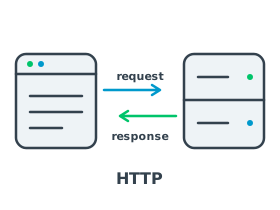
How an HTTP request is structured
Before sending a request, the browser looks up the server's IP address through DNS and then opens a connection to it. Every HTTP request contains a method, a path, headers and (not always) a body. The most common methods are GET for retrieving data and POST for sending it. The full chain from typing an address to rendering a page is covered in the article How a browser works.
HTTP and HTTPS
Plain HTTP transmits data unencrypted, so the modern web uses HTTPS — the same HTTP, but inside a secure channel:
- Encryption — the connection is protected by the TLS protocol (formerly SSL).
- Domain verification — the certificate confirms that you are talking to exactly the right site.
- Choosing a site on a single IP — this is handled by the SNI extension when the TLS connection is established.
This way HTTP remains the foundation of the web, while TLS adds confidentiality and integrity to it.