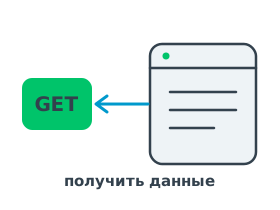
How GET works
The parameters of a GET request are passed right in the address bar after a question mark, for example /search?q=dns. Such a request is considered safe and idempotent: it should not change the state of the server, and repeating it yields the same result. Before sending it, the browser finds the server's IP address through DNS — see the article How a browser works for more detail.
GET or POST
The choice of method depends on what the request does:
- GET — reads data, the parameters are visible in the URL, and the response can be cached.
- POST — sends data to the server, passes it in the request body, and changes state.
- Security — confidential data must not be sent via GET: it would end up in history and logs. For that you need POST over TLS.
A simple rule: if you are retrieving data, use GET; if you are sending it, use POST.