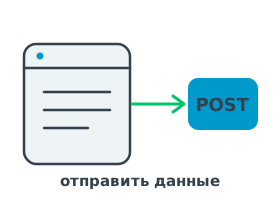
How POST works
The browser builds a POST request when you submit a form or upload a file. The request body can be of any size and contain binary data, and the Content-Type header tells the server its format. Like any request, POST begins with looking up the IP address through DNS and establishing a connection — the whole path is described in the article How a browser works.
Characteristics of POST
The method has important distinctions that affect how a site behaves:
- Not idempotent — resending it can create a duplicate record, which is why browsers ask you to confirm resubmitting a form.
- Not cached — a response to POST is not saved by default, unlike GET.
- Confidentiality — the data is hidden from the address bar, but only TLS encryption actually protects it.
POST is used wherever data needs to be sent to a server: signing in, payment, publishing content.