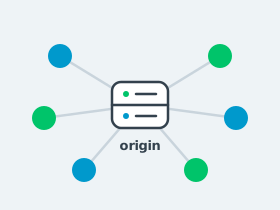
How a CDN works
The site's domain is pointed at the CDN through DNS (usually with a CNAME record). A user reaches the edge node closest to them; if the requested file is already in the node's cache it is served immediately, otherwise the node fetches it from the origin server and stores it. How long it stays cached is controlled by headers and the TTL.
Why you need a CDN
Using a CDN brings several benefits:
- Speed — content is served from a geographically close node, so latency is lower.
- Offloading — the origin server handles only a fraction of requests, much like a reverse proxy.
- Resilience — spreading traffic and load balancing help survive spikes and attacks.
A CDN is especially useful for high-traffic sites with heavy static content — images, video and scripts.