How reverse DNS works
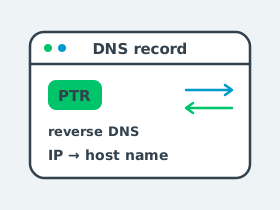
A forward record turns a name into an address, while PTR does the opposite — it returns a name for an address. These records live not in the domain's own zone but in special service zones: in-addr.arpa for IPv4 addresses and ip6.arpa for IPv6. The address is written in reverse octet order inside the zone name — for example, 192.0.2.10 is queried as 10.2.0.192.in-addr.arpa.
Why a PTR record matters
The main consumer of reverse DNS is email:
- Anti-spam — the receiving mail server checks whether the sender's IP has a valid PTR record; a missing one is often a reason to reject the message.
- Diagnostics — reverse DNS lets traces and logs show readable names instead of bare addresses.
- Matching records — many services require the PTR and the forward A record to point at each other (forward-confirmed reverse DNS).
A PTR record is usually configured not in the domain panel but by the owner of the address — the hosting provider or the network's registry.