How a subdomain is created
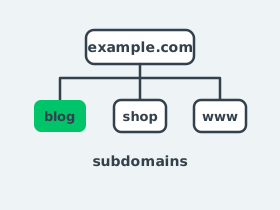
A subdomain is not bought — it is created through DNS: you add a record for the chosen name in the parent domain's zone. Usually that is an A record pointing to a server's IP address, or a CNAME pointing to another name, such as an external service. Once the zone updates, blog.example.com resolves just like an ordinary domain.
Why subdomains are useful
Subdomains help structure a project and split traffic:
- Sections — blog, shop or docs move parts of a site onto separate addresses.
- Services — mail, api or cdn route traffic to different servers and platforms.
- Levels — nesting is not limited to one step: names like dev.api.example.com are possible.
Unlike a TLD, subdomains are ones you create and change yourself — all you need is access to the parent domain's DNS.