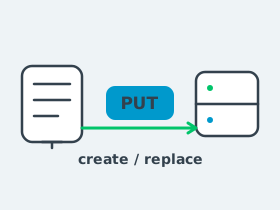
Idempotency of PUT
The key property of PUT is idempotency: repeating the same request produces the same result. Send PUT twice and you will not create two copies — the resource is simply overwritten with the same data. This sets PUT apart from POST, which usually creates a new object each time. Like every HTTP method, PUT is stated at the start of the request together with the path and headers.
PUT, POST and GET
To pick a method it helps to compare their behaviour:
- PUT — fully replaces a resource at a known address and is idempotent.
- POST — creates a new resource, the server assigns the address; not idempotent.
- GET — only reads data and does not change server state.
PUT is handy when the client knows the exact URL and wants to replace the whole content; for partial changes the PATCH method is used. Sending data is safer over HTTPS.