How a resolver works
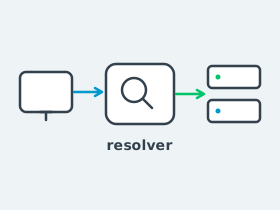
Given a name, a recursive resolver walks the DNS hierarchy itself and queries other servers on the client's behalf:
- Receives the query — the browser or OS sends the resolver a name such as example.com.
- Finds the answer — the resolver contacts the root servers, then the top-level domain servers, and finally the zone's authoritative server.
- Returns the result — the client gets the final address without seeing the intermediate steps.
This step is exactly the first stage in the story of how a browser opens a site.
Caching and providers
To avoid repeating the walk on every request, the resolver keeps answers in a cache for the TTL set in the record. Until that time expires, a repeat query is served instantly from memory.
A resolver is usually provided by your internet provider, but you can point to a public one: Google (8.8.8.8) or Cloudflare (1.1.1.1). The choice of resolver affects both lookup speed and the privacy of your queries.