How IMAP works
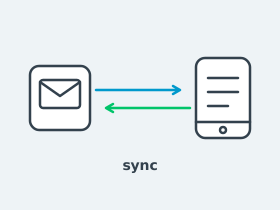
The client connects to the mail server over TCP (usually port 993 with encryption) and works with messages without downloading them in full: it requests the folder list and headers, and fetches a message body only when you open it. The mail itself stays on the server, so a phone, a laptop and the web interface all show the same inbox. The client finds the server address through DNS, while the domain's MX record defines the route for incoming mail.
IMAP, POP3 and SMTP
The three mail protocols solve different problems:
- IMAP — reads and synchronises messages, leaving them on the server; handy for working from several devices.
- POP3 — downloads messages to one device and usually deletes them from the server, with no sync.
- SMTP — handles not reading but sending and relaying mail between servers.
So in practice IMAP and SMTP work as a pair: the former pulls incoming mail from the server, the latter sends outgoing mail.